Why Home Prices Vary in Wynfield, MacAulay, and Birkdale
By Austin Quick | Ivester Jackson | Christie’s International Real Estate
Two homes in the same neighborhood can have similar square footage and the same number of bedrooms, yet sell for very different prices. For homeowners in Wynfield, MacAulay, and Birkdale, that can make deciding where to price your own home confusing.
All three communities benefit from their Huntersville location. But a desirable address is only part of the value equation. The home’s size and square footage, quality, updates, maintenance, and the size and usability of the lot can make a meaningful difference in what a buyer is willing to pay. Pricing is highly situational: each property needs to be evaluated individually and against the competition buyers have at that time.
When I help a seller think through pricing, the question goes beyond what the neighbor sold for. We need to understand how that home compares to yours—and whether selling in its current condition or making a few improvements offers the better outcome.
A strong location gives your home a starting advantage
Wynfield, MacAulay, and Birkdale put buyers in an established part of Huntersville with access to shopping, dining, and the broader Lake Norman area. Those location benefits are part of the appeal before a buyer ever steps inside.
However, a shared town or neighborhood name does not make every property interchangeable. Even within one community, a quiet interior lot may appeal differently than a home near a busy road. Privacy, views, and access to neighborhood amenities can also affect how buyers compare two otherwise similar homes.
Location supports the value. The individual property helps determine where it belongs within the market.
Why similar homes can sell for different prices
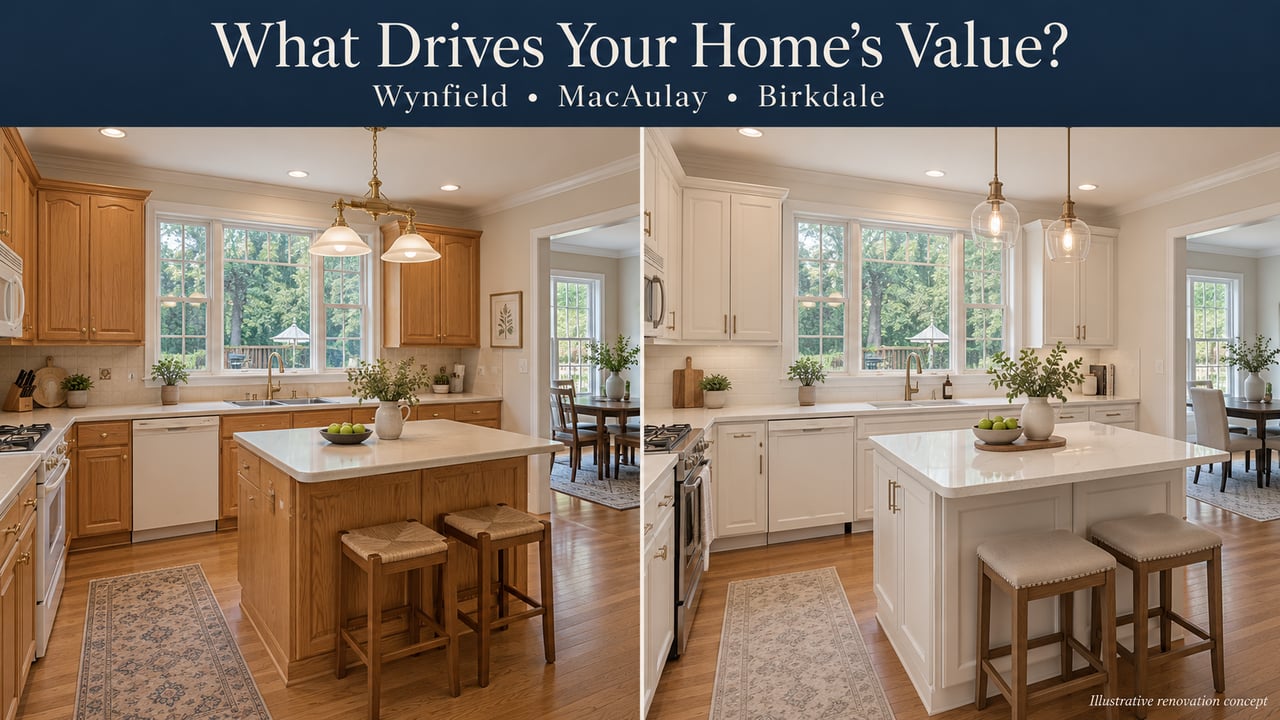
Imagine two homes with comparable layouts and square footage. One has an updated kitchen, refreshed bathrooms, consistent flooring, and a well-maintained backyard. The other has original finishes, worn carpet, and several projects a buyer will need to tackle after closing.
Both may be good homes. But they offer different levels of convenience and require different amounts of future spending.
A buyer considering the second home may account for more than the contractor’s estimate. They may also weigh the time needed to organize the work, the disruption of living through renovations, and the possibility of unexpected costs. A thoughtfully updated home can reduce those concerns and support a stronger price when comparable sales justify it.
Quality matters just as much as how recently the work was completed. Well-installed cabinets, durable materials, and a cohesive design can carry more appeal than a quick cosmetic renovation with uneven workmanship.
Maintenance matters, too. Attractive finishes do not erase concerns about an aging roof, HVAC system, moisture issues, or deferred repairs. Buyers evaluate the whole property.
Square footage and the size of your home matter
The size of your home is an important part of its value. A 2,400-square-foot home and a 3,600-square-foot home in the same neighborhood should not automatically share the same pricing expectations, even when both are beautifully updated. The amount of finished living space, bedroom and bathroom count, and how that space functions all belong in the comparison.
Layout matters alongside the number. A usable additional bedroom, a comfortable living area, or flexible space for an office can affect how well a home meets a buyer’s needs. More square footage adds space, but its contribution to price depends on its quality, function, and what comparable buyers are willing to pay.
That is why I would not simply multiply your square footage by the highest price per square foot in the neighborhood. A smaller, extensively updated home may sell for more per square foot than a larger home while still selling for a lower total price. We need to compare homes of similar size and then account for differences in condition, layout, finishes, and setting.
Lot size matters—and so does usable space
The acreage listed online tells only part of the story. A larger lot does not automatically command a higher price than every smaller one.
Buyers may place value on a level backyard, privacy from neighboring homes, mature landscaping, or an outdoor area that connects comfortably to the house. A smaller, usable lot can be more appealing than a larger property with steep slopes or limited usable space.
When pricing a home in Wynfield, MacAulay, or Birkdale, I want to consider what the lot actually offers alongside its size. Outdoor living, setting, and privacy deserve attention in the comparison.
Selling in your current condition
Selling without a major renovation can be a sensible choice. You may have a firm moving timeline, prefer to preserve cash, or simply want to avoid managing contractors before listing.
The key is pricing for the home buyers will see today. A home with original kitchens and bathrooms should be compared carefully with other homes in similar condition. A renovated sale down the street can provide context, but it should not automatically become your asking price.
Even without remodeling, cleaning, decluttering, improving the landscaping, and taking care of small maintenance items can help the home present well. Selling in its current condition can still involve thoughtful preparation.
Updating kitchens and bathrooms before listing
Kitchens and bathrooms are useful places to evaluate because their condition can strongly shape a buyer’s impression. The right scope depends on what is already there and what competing homes offer.
In a kitchen with a functional layout and sound cabinets, a professional cabinet refresh, updated hardware, improved lighting, or new countertops may be worth considering. In a bathroom, a vanity, mirror, lighting, fresh paint, or attention to tired grout may improve the presentation without requiring a full renovation.
A broader refresh can bring everything together: neutral paint, clean or updated flooring, consistent fixtures, and a welcoming entry. The goal is a home that feels cared for and cohesive.
Before committing to the work, compare actual estimates with a realistic selling range. Remodeling cost and resale value are different measures; the National Association of REALTORS® examines estimated cost recovery and buyer appeal separately in its Remodeling Impact research.
Spending more does not guarantee that you will take home more at closing.
Pricing should match your home and your plan
Home pricing is extremely situational. There is no single number that applies to every home in Wynfield, MacAulay, or Birkdale. Your home’s size, condition, updates, lot, and current competition shape its market position. Your timeline and willingness to make improvements help determine the listing strategy within that market reality; they do not independently change what buyers will pay.
A useful pricing analysis starts with recent comparable sales, then considers condition, finished square footage, layout, lot characteristics, and the timing and terms of those sales. Active listings help show what buyers can choose instead. Price per square foot is a reference point, but it cannot capture all of those differences on its own.
For a seller deciding whether to update, I would compare two realistic paths: the likely selling range in the home’s current condition and the likely range after a specific list of improvements. Then we account for the work, added carrying costs, and time involved.
That comparison helps answer the question that matters most: which approach best supports your goals and your net proceeds?
If you are considering selling in Wynfield, MacAulay, or Birkdale, I can help you evaluate your home’s current position, identify improvements worth considering, and build a pricing strategy around your property and timeline. Before you spend money preparing to sell, let’s walk through the home and make a plan.
Austin Quick
Broker | Ivester Jackson | Christie’s International Real Estate
Huntersville • Cornelius • Davidson