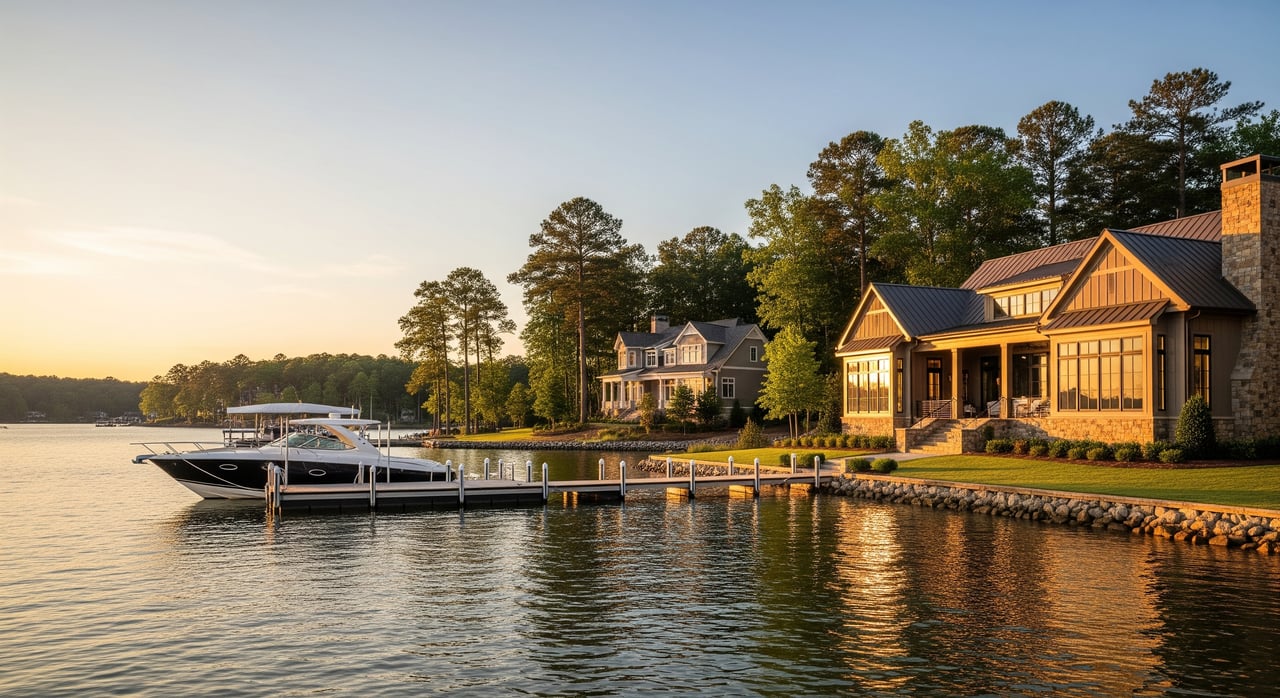
Thinking about lake life in Cornelius but not sure if the waterfront premium is worth it? You are not alone. Many buyers and sellers want a quick, practical way to compare waterfront and off-lake homes, without the hype. In this guide, you will learn how the two segments differ on price drivers, time on market, inventory patterns, and real-world costs, plus what to verify before you act. Let’s dive in.
Waterfront vs off-lake price basics
Waterfront homes in Cornelius typically command a premium over off-lake homes because of scarcity, direct water access, and views. That premium is not a flat number. It depends on lot features, dock quality, water depth at the dock, and overall home condition.
Key drivers of value include:
- Water depth at the dock and navigability
- Main-lake views vs protected cove
- Dock type and condition, lift capacity, and permit status
- Shoreline type and stabilization (rock, sand, bulkhead) and lot slope
- Riparian rights and usable frontage
- Flood elevation and any mitigation work
To measure the premium, compare rolling medians:
- Review 12-, 24-, and 36-month median sale prices for both segments to see trend and stability.
- Use a same-month year-over-year check to control for seasonality.
- Calculate the “waterfront premium” as: median waterfront price divided by median off-lake price, minus 1. Express it as a percentage.
Also look at price per finished square foot for both groups, and for waterfront lots, consider how parcel size and usable shoreline contribute to value. Expect wider price dispersion among waterfront homes, especially where lot attributes and dock packages vary.
How fast each segment moves
Market speed is about more than impressions and showings. Focus on a few clear metrics to compare waterfront versus off-lake homes:
- Median days on market (DOM) for sold listings
- Median days active for current inventory
- List-to-sale price ratio (percent of original list price received)
- Months of supply (active listings divided by average monthly closed sales)
Waterfront turnover is often seasonal, with more energy in spring and early summer. When priced right, well-sited waterfront lots can move efficiently in those months. That said, high-end properties may take longer if the buyer pool is smaller or mortgage rates move. Off-lake homes usually follow broader metro trends with more predictable comps and steadier absorption.
Inventory and supply in Cornelius
Waterfront inventory is a small share of total Cornelius listings, which helps support pricing. Owners of prime waterfront lots list less often, so new waterfront opportunities arrive more slowly than off-lake homes.
What to watch:
- Waterfront’s share of total residential listings (as a percent of all active listings)
- New listing counts by month to see spring and summer spikes
- Active and sold counts across price bands (under $1M, $1–2M, $2M+)
- New construction vs existing stock, since true new-build waterfront is limited
In most market cycles, you will see a higher concentration of waterfront listings in the upper price bands. Off-lake inventory typically offers more options in mid-tier price points and a wider range of neighborhoods.
Negotiation patterns and pricing dynamics
Waterfront pricing often shows resilience when supply is tight, especially for lots with strong attributes like deep water and long views. In softer conditions, negotiation gaps can widen because buyers weigh higher carrying costs and maintenance. Off-lake homes tend to compete on price per square foot and neighborhood comps, which can make pricing and appraisals more predictable.
For both segments, track the list-to-sale price ratio over 12-, 24-, and 36-month windows, and check the share of homes sold within 30, 60, and 90 days to see where momentum sits.
Financing, appraisals, and contingencies
Financing and appraisal dynamics can differ between segments:
- Cash share: Waterfront purchases often have a higher portion of cash buyers at upper price points.
- Appraisals: Waterfront comps are harder to match. Appraisers may expand the time window or radius to find suitable lakefront sales, which can add volatility and time.
- Contingencies: Inspection, appraisal, and financing contingencies are common. In competitive conditions, some buyers shorten timelines or remove certain contingencies, but most still allow due diligence for docks and shoreline.
If you are buying, expect your lender to take a careful look at shoreline stability, erosion controls, and any unique waterfront structures. If you are selling, plan for extra time to furnish documents and coordinate inspections.
Costs, permits, and regulations to confirm
Owning on Lake Norman is a lifestyle decision with added ownership details. In Cornelius, factor in:
- Dock and shoreline permits: Lake Norman is managed as a Duke Energy reservoir. Private docks and in-water work typically require permits or agreements. Confirm the current permit status and whether any docks are transferable.
- County approvals: Mecklenburg County handles building permits and property assessments. Some shoreline work may need county approvals.
- Flood zones: FEMA flood maps determine zones that drive insurance requirements. An elevation certificate can help clarify risk and premiums.
- Insurance: Waterfront parcels can face higher costs for flood and wind. Some policies use higher deductibles or separate wind and hail coverage.
- Shoreline maintenance: Dock repair or replacement, lifts, bulkhead work, and erosion control can range from several thousand to tens of thousands, depending on scope.
- Utilities: Many Cornelius areas have municipal sewer, but verify service at the parcel level and understand any septic implications if applicable.
Documenting these items early reduces friction, supports appraisals, and builds buyer confidence.
Buyer checklist: waterfront vs off-lake
Use this quick list to pressure-test your decision:
- Define the lifestyle value: boating, swimming, and views versus a lower purchase price and simpler maintenance off-lake.
- Verify use and access: water depth at the dock, riparian rights, and any shared access limitations.
- Confirm permits: current Duke Energy dock permit status, any shoreline agreements, and recent repairs.
- Review risk: flood zone status, elevation certificate, and sample insurance quotes.
- Inspect smart: shoreline and dock inspection plus a home inspection focused on water-related systems.
- Check rules: HOA covenants for dock types, boat restrictions, or construction guidelines.
- Balance location factors: commute patterns, proximity to retail services, and daily convenience.
Seller playbook: price and market with confidence
If you are listing a waterfront property in Cornelius, lead with the lot:
- Feature lot and dock attributes front and center: water depth, protected cove vs main-lake, lift capacity, shoreline type, and any recent improvements.
- Assemble documents: permits, maintenance receipts, surveys, elevation certificate, and shoreline work history.
- Price with context: use recent waterfront comps, expand the radius or time window when needed, and clearly explain adjustments for lot quality and dock features.
- Reduce friction: consider pre-list inspections for the dock and shoreline and provide clear disclosures so buyers move faster and appraisals stay on track.
For off-lake sellers, emphasize living spaces, finishes, neighborhood amenities, and strong price-per-square-foot positioning supported by tight comps.
How we analyze Cornelius data
When you want a clear side-by-side view of waterfront versus off-lake performance, structure your analysis with a few simple steps:
- Define the cohorts: use Cornelius municipal boundaries and a consistent MLS waterfront flag limited to parcels with actual lake frontage and riparian rights.
- Choose timeframes: compute 12-, 24-, and 36-month rolling medians and compare same-month year over year to control seasonality.
- Calculate core stats: median sale price, price per finished square foot, median DOM, months of supply, and list-to-sale price ratio. Include the share sold within 30, 60, and 90 days, plus the cash-versus-financed mix when available.
- Segment by price band: under $1M, $1–2M, and $2M+ to highlight where waterfront listings cluster and how off-lake inventory fills gaps.
- Manage outliers: ultra-luxury lakefront estates can skew medians. Present them separately or use boxplots to show quartiles and distribution.
- Bring it to life: pair charts with qualitative context about dock permits, shoreline condition, and flood elevation to explain why certain homes outperform.
This approach gives buyers and sellers a grounded read on value and velocity without guesswork.
When to buy or list in Cornelius
Seasonality matters. Waterfront listings and buyer activity typically peak from spring through summer. If you are selling lakefront, aim to be ready as the weather turns, with permits and maintenance records in hand. If you are buying, expect more selection in peak months, and be prepared to move quickly on well-sited lots.
Market cycles and mortgage rates can influence both segments. Higher-priced waterfront homes can be more sensitive to rate shifts and credit conditions, which can alter days on market and negotiation leverage. Off-lake homes often track broader metro dynamics with steadier comps.
Work with a local specialist
Choosing between waterfront and off-lake in Cornelius is a balance of lifestyle, budget, and risk. You deserve clear advice, strong marketing, and friction-free execution. As a boutique, owner-operated brokerage in Cornelius with a specialty in Lake Norman, we pair hands-on service with elevated presentation and proven relocation workflows. Whether you are listing a multi-million-dollar lakefront estate or aiming for a smart off-lake buy, we help you price, prepare, and negotiate with confidence.
Ready to compare your options and see current numbers tailored to your goals? Schedule your free consultation with Austin Quick.
FAQs
What is the waterfront premium for Cornelius homes?
- It varies by lot and dock features; estimate it by comparing 12-month median sale prices for waterfront versus off-lake and expressing the difference as a percentage.
How long do Cornelius waterfront homes usually take to sell?
- Time on market depends on season and price point; momentum often rises in spring–summer, while higher-end properties may take longer due to a smaller buyer pool.
What permits are required for docks on Lake Norman in Cornelius?
- Private docks and most in-water or shoreline structures typically require permits or agreements under Duke Energy’s program, so always confirm current status and transferability.
Do Cornelius waterfront homes need flood insurance?
- Some parcels are in higher-risk FEMA flood zones; check flood maps and an elevation certificate, then obtain quotes to understand potential premiums and deductibles.
Why are appraisals for lakefront properties more complex?
- Suitable waterfront comps are fewer, so appraisers may widen the search radius or time window, which can add appraisal volatility and timing considerations.
Are cash offers more common for waterfront homes around Lake Norman?
- Cash purchases tend to be more frequent at higher price points, which are common in the waterfront segment, though the exact share varies by season and market conditions.