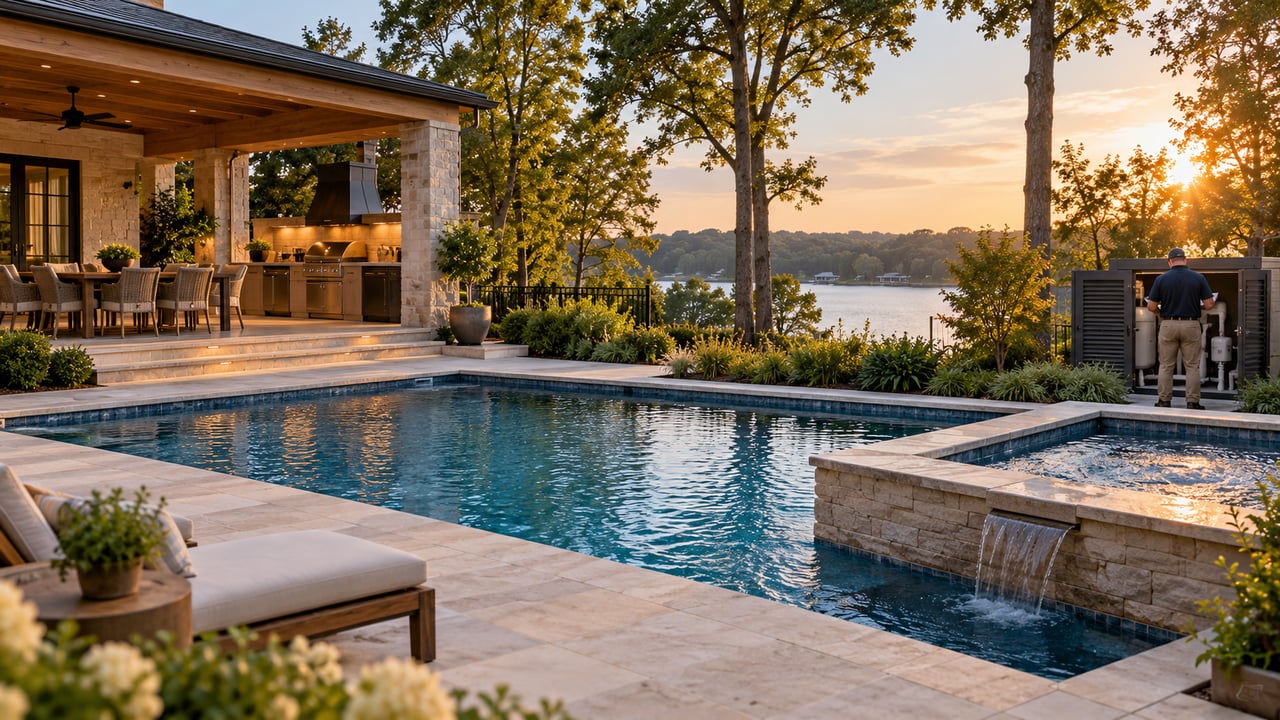
At a Lake Norman luxury home, the backyard can function like another wing of the property. A pool, spa, covered terrace, outdoor kitchen, fireplace, and carefully designed landscaping may add tremendous enjoyment—but they also introduce systems and responsibilities that deserve the same attention as the home’s interior.
The goal is not simply to decide whether the outdoor space looks impressive. It is to understand how it was built, how it operates, what it requires, and whether it fits the way you plan to use the property.
Start with permits, plans, and property boundaries
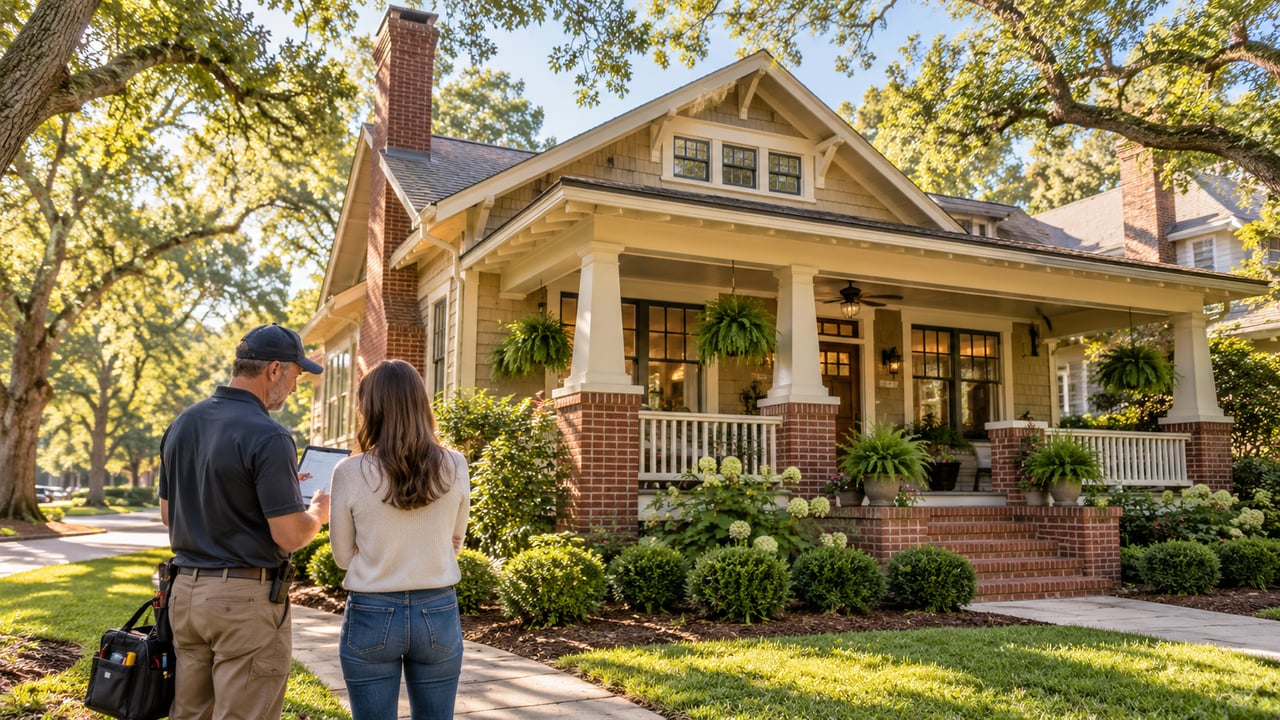
Before evaluating finishes, confirm that the major improvements have a documented history. Ask for pool and spa permits, final approvals, surveys, warranties, equipment specifications, repair invoices, and plans for covered structures or outdoor kitchens.
Mecklenburg County explains that the installation of swimming pools, spas, and hot tubs requires zoning approval as part of the permitting process. The county also advises owners with septic systems to confirm that a proposed pool will not interfere with the septic area. Its Code Information and Resource Center provides guidance on residential pool and outdoor cooking requirements, while permit records can be reviewed through the county’s online tools.
A current survey can help clarify the relationship between improvements, setbacks, easements, septic areas, shoreline restrictions, and property lines. If a structure or utility appears different from the available records, ask the appropriate professional to investigate rather than assuming it was approved.
Inspect the pool and spa as operating systems
Clear water does not prove that every component is in good condition. A qualified pool professional can evaluate the vessel, surface, coping, tile, decking, drains, lights, valves, filters, pumps, heaters, automation, sanitizing equipment, and visible plumbing.
Ask the inspector to operate the systems when conditions allow and identify active leaks, unusual noise, inconsistent pressure, surface deterioration, or equipment nearing the end of its expected service life. If the pool includes a spa, water features, an automatic cover, saltwater equipment, or remote automation, confirm each feature separately.
Request model and serial numbers, service history, recent water-care records, and instructions for seasonal operation. Equipment efficiency matters as well as condition. The U.S. Department of Energy maintains current energy-conservation standards for dedicated-purpose pool pumps, so model information can help a pool professional explain how an existing system compares with current equipment.
Treat safety features as essential infrastructure
Review fencing, gates, latches, doors from the house, alarms, covers, steps, handrails, drain covers, lighting, and the visibility of the water from primary living areas. Safety requirements depend on the property and applicable code, but meeting a minimum standard should not end the conversation.
The U.S. Consumer Product Safety Commission’s Pool Safely guidance recommends layers of protection, including a non-climbable barrier at least four feet high, self-closing and self-latching gates, door alarms where appropriate, and maintained pool or spa covers. Buyers with children, frequent guests, or short-term visitors should consider how the entire site controls access—not only whether a fence exists.
Confirm that safety equipment works during your inspection. A gate that does not close consistently or a cover that cannot be operated is not providing the protection its presence suggests.
Evaluate the outdoor kitchen and fire features
An outdoor kitchen can combine gas, electricity, plumbing, refrigeration, ventilation, and weather-exposed cabinetry. Test installed appliances and review their ratings, shutoffs, ventilation, GFCI protection, water supply, drainage, and condition. Confirm which appliances and accessories convey with the property.
Covered cooking areas need extra attention. Mecklenburg County notes that an outdoor range in a screened porch must be rated for outdoor use and paired with the ventilation specified by its manufacturer. Fireplaces, fire pits, patio heaters, and grills should also be evaluated for clearances, fuel connections, ignition, and nearby combustible materials.
If a feature was added after the original construction, ask for the permit and contractor information. Attractive stonework can conceal complicated electrical, gas, and drainage installations.
Look beyond the hardscape
Outdoor living succeeds when water moves away from the home, surfaces remain stable, and landscaping works with the site. Inspect retaining walls, deck framing, railings, stairs, pavers, expansion joints, drainage inlets, irrigation, exterior outlets, lighting, and grading.
Watch for ponding, settlement, loose coping, cracked surfaces, erosion, or vegetation interfering with equipment and structures. Around the lake, mature trees and wooded privacy can be significant assets, but roots, falling limbs, leaf load, and shade may affect maintenance. Ask how stormwater moves during heavy rain—not only how the yard appears on a dry day.
Decide whether the space works beyond one season
Consider sun exposure, shade, wind, privacy, insects, lighting, bathroom access, wet-foot traffic, storage, and the route between the indoor kitchen and outdoor entertaining areas. A beautifully photographed space may feel very different at midday, after dark, or during cooler months.
Covered terraces, heaters, fans, retractable screens, and thoughtful lighting can extend usefulness, but each adds equipment that should be tested and documented. Evaluate the whole experience: where guests park, how they reach the backyard, whether furniture blocks circulation, and how easily the space can be secured when not in use.
Understand insurance and ongoing ownership
Tell your insurance professional about the pool, spa, outdoor structures, cooking equipment, and fire features before closing. The North Carolina Department of Insurance explains that homeowners policies can include personal-liability protection, but coverage and underwriting requirements vary. Obtain property-specific guidance rather than assuming the seller’s arrangement will transfer.
Finally, build a realistic ownership plan. Ask for routine service schedules, utility history, winterization procedures, landscape contracts, warranties, and anticipated equipment needs. The most valuable outdoor spaces are not necessarily the largest; they are the ones whose condition, documentation, and maintenance match the buyer’s priorities.
If you are comparing luxury homes in Huntersville, Cornelius, Davidson, or elsewhere around Lake Norman and Charlotte, contact Austin Quick for a property-specific strategy that looks beyond the presentation and into the details that shape long-term ownership.