2026: A Return to Normalcy or a New Normal? Why This Market Feels Like 2019
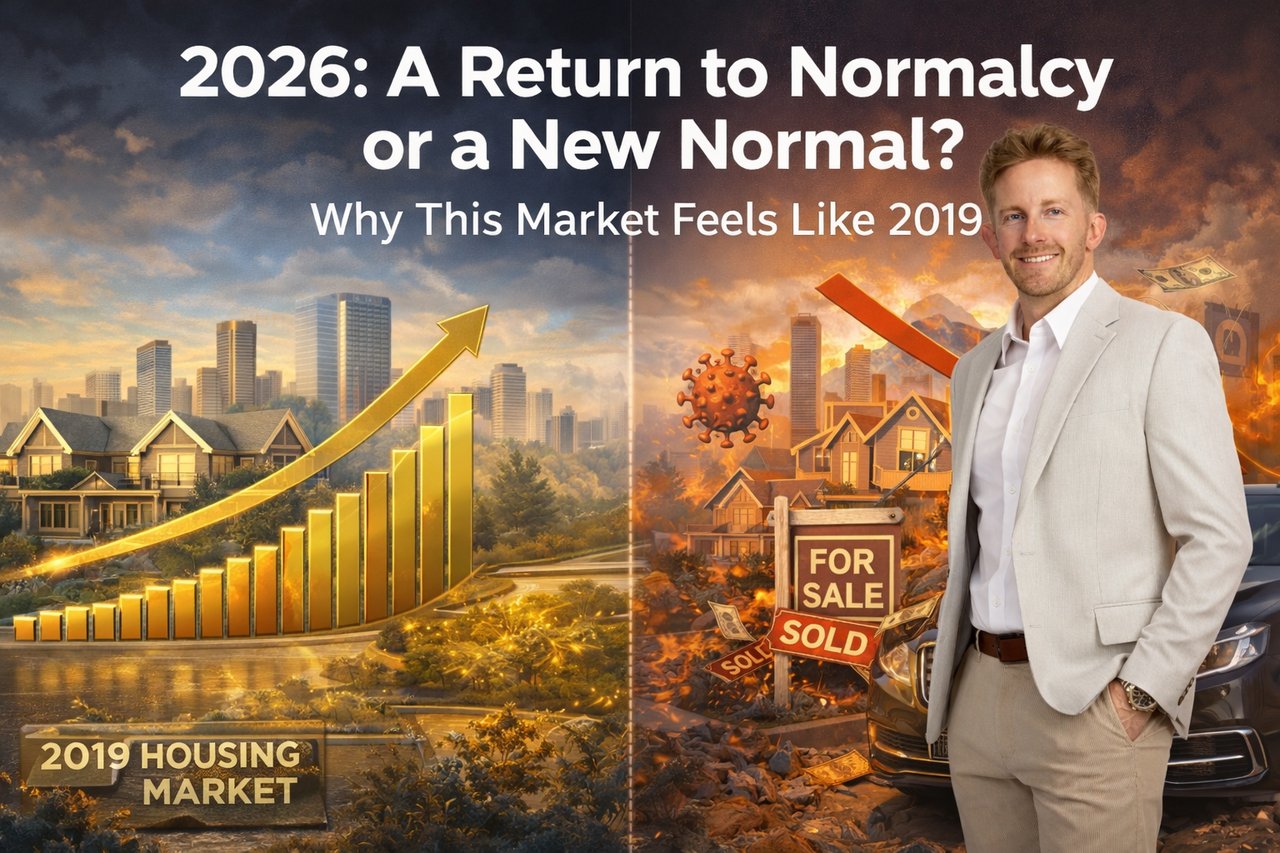
As the dust settles on the most turbulent years in recent real-estate history, many industry watchers are drawing parallels between the 2026 housing market and the pre-pandemic conditions we saw in 2019. While every cycle has its differences, 2026 is shaping up to resonate with the rhythm of 2019 — not because it’s identical, but because it’s anchored by fundamentals instead of the anomalies we saw during the pandemic era.
The Artificiality of the Pandemic Market
From early 2020 through 2021, the real estate market behaved in ways that defied historic norms. Mortgage rates plummeted to record lows (often below 3%), demand surged as buyers rushed for space and safety, and housing prices skyrocketed in markets nationwide. Low rates + high demand = massive price gains. But that combination wasn’t a reflection of natural equilibrium — it was an artificial boost driven by unprecedented monetary policy, pandemic lockdowns, and temporary behavioral shifts.
This period was an anomaly — not the result of organic, long-term demand and supply dynamics. Buyers were reacting to fear, stimulus checks, government policies, and extremely cheap money. Sellers, meanwhile, were hesitant to list because they didn’t want to give up ultra-low rates. The result? A compressed inventory, intense bidding wars, and valuations that outpaced economic fundamentals.
That surge wasn’t reality. It was a distorted short run, much like how markets can overheat when banks suddenly flood the system with liquidity. Those conditions didn’t last — and they won’t be repeated without a similar crisis. Fast forward to today, and markets are adjusting, not rebounding back to pandemic highs or relying on distorted incentives. That’s why many say the market in 2026 more closely mirrors 2019 — a normal year of balanced supply and demand — than the unusual 2020–2021 period.
2026: Rotation Back to Fundamentals
Official forecasts for 2026 paint a picture of a more balanced housing market with modest price growth, easing mortgage rates, and slowly improving affordability. Expectations from major real-estate economists include:
-
Mortgage rates staying above pandemic lows (~6.2–6.3% range), well above the ultra-cheap pandemic rates but closer to historical averages.
-
Home prices increasing modestly (2%–4%) rather than in double-digits.
-
Better balance between supply and demand, with inventory increasing closer to pre-pandemic norms.
-
Home sales growth, but not frenzied growth, with some forecasts counting in the low single-digit rates and others projecting moderate double-digit gains as confidence returns.
If 2019 was defined by a steady, predictable cycle that didn’t rely on policy extremes, then 2026 looks eerily similar: a market that isn’t overheated, isn’t collapsing, and is mostly driven by fundamental housing needs rather than an external shock.
Why Some Agents May Leave the Industry
Despite improving macro conditions, the experience of realtors over the past few years has been grueling. High inventory, slower sales, tougher competition, and a shifting buyer psyche have made the day-to-day business harder — and that pressure is driving some professionals to consider alternate careers.
Here are a few reasons many think a large chunk of agents might exit:
1. Transaction Volume Still Below Pre-Pandemic Levels
Even as the market improves, total transaction volumes remain subdued compared to the pandemic boom years, meaning fewer deals per agent and slimmer commissions — especially for those who relied on high turnover to make a living.
2. Competition Remains Fierce
Despite cooling sales and tough conditions, the number of licensed agents hasn’t dropped in proportion to the change in activity in many markets. That means more competition for fewer deals.
3. The Lock-In Effect
A large number of homeowners are locked in to low rates from prior years — this suppresses turnover, which directly affects agents’ ability to close transactions. Many agents built their business models on churn that simply no longer exists under realistic interest-rate environments.
4. Burnout and Structural Changes
Remote work, technology disruption, and shifts in how buyers search for homes are reshaping the skillset needed to compete. For some agents, this transition is energizing; for others, it’s a deterrent.
All this feeds into an oft-repeated industry prediction: up to 20% of realtors may leave the industry over the next few years, either scaling down to part-time, pivoting into related fields (like property management or mortgage brokering), or opting out of real estate altogether. It might seem dramatic, but when you consider long-term averages and how many agents were drawn in by the pandemic’s unusual conditions, it becomes plausible.
What This Means for 2026 and Beyond
If the market settles into this “post-pandemic normal,” we may see a landscape that resembles 2019 but with lessons learned:
-
Smoother price appreciation rather than runaway gains
-
More predictable transaction cycles
-
Renewed focus on fundamentals like affordability and local economic conditions
-
A leaner, more experienced group of licensed professionals
In many ways, 2026 could feel like the market resetting itself back to reality.